
What I Read this Year — 2025
Key learnings from the books I read in 2025

I set out to read 50 books this year and made it through 23—not quite the goal, but each one left its mark. I was reviewing my highlights from the books I read this year and thought I would throw my 2025 reflections post in your timeline. Here are the key themes that emerged:
On Relationships
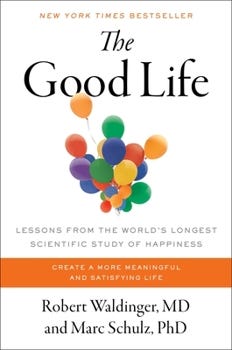
The most profound insight came from The Good Life: relationships aren’t passive—they atrophy without exercise. We assume friendships will always be there, waiting for us when work slows down or the kids get older or over the holidays. But the math is sobering: if you’re 40 and see someone once a week, that’s only 87 days together before you turn 80. This brought back memories from Four Thousand Weeks by Oliver Burkeman and when you apply this math it either makes you scare or motivates you to cherish the relationships you have.
The solution is simple but not easy: make the call, take out your calendar, and make recurring plans. Attention is the rarest form of generosity, and even casual contact can open doors to new opportunities through weak ties.
Our strongest feelings emerge from our connections with other people, and while the social world is filled with pleasures and meaning, it also contains doses of disappointment and pain.
Are you spending time with the people you most care about? Is there a relationship in your life that would benefit both of you if you could spend more time together? These untapped resources are often already in our life, waiting. A few adjustments to our most treasured relationships can have real effects on how we feel, and on how we feel about our lives.
On Time
Imagine if you started life with a fixed account—not of money, but of time. Every activity drains it, but you don’t know the balance. When it hits zero, you’re done. Would you live differently?
We live in “continuous partial attention”, constantly switching between tasks, never fully present. The antidote is to ask: are you spending time with the people you most care about?
Imagine you began your life with all the money you’ll ever have. The instant you were born you were given one account, and anytime you’ve had to pay for something, it’s come out of that account. You don’t need to work, but everything you do costs money. Food, water, housing, and consumer goods are as expensive as ever, but now even sending an email requires some of your precious funds. Sitting quietly in a chair doing nothing costs money. Sleep costs money. Everything you encounter requires you to spend money. But the problem is this: you don’t know how much money is in the account, and when it runs dry, your life is over. If you found yourself in this circumstance, would you live in the same way? Would you do anything differently? … instead of money, our one account has a limited amount of time—and we don’t know how much.
On Money & Investing
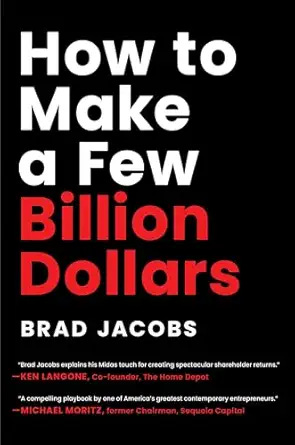
From How to Make a Few Billion Dollars, I learned that scalability is everything. Brad Jacobs looks for industries where you can envision the path from millions to tens of billions—where size creates economies of scale and technology can drive margins.
His research process is thorough: read everything, set Google Alerts, watch CEO interviews, then meet face-to-face with industry experts. Success requires specificity: know exactly how much money you want, by when, and what you’ll do with it.
I start by reading everything I can get my hands on—journals, periodicals, newspapers, trade publications, employee reviews on web-based recruiting sites, you name it. I look at all the websites and social media of the major players and the up-and-comers in the industry. I set Google Alerts for industry CEO names or other keywords, and I watch lots of YouTube interviews with CEOs. As I go through the material, I note my observations in preparation for the next step—my interviews with experts. After absorbing a lot of data and arming myself with questions, I seek out people who live and breathe the industry I’m considering. Some of this can be done with video chats, but this phase is more about getting face-to-face and listening intently. I also belong to the Business Council and the Economic Club of New York, which are valuable networking resources for me. They give me an entrée to CEOs in almost any industry I’m interested in learning more about.
On Problems & Ambition
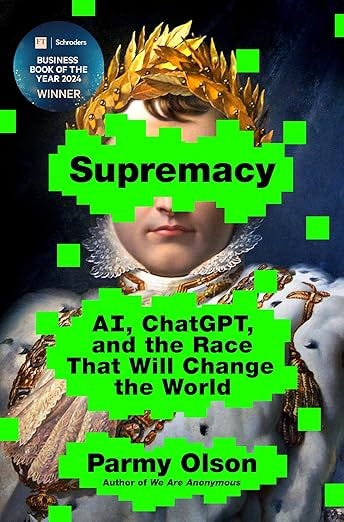
Problems are assets, not obstacles. Align yourself with those who have power and build a support network—there will always be haters. From Sam Altman’s poker days in Stanford Parmy Olson concludes it gave him this uncanny ability to not care what people think and allowed him to calculate risk more effectively and bet on investments that look crazy. This year revealed that he still carries this approach.
Poker is all about watching others and sometimes misdirecting them about the strength of your hand, and Altman became so good at bluffing and reading his opponents’ subtle cues that he used his winnings to fund most of his living expenses as a college student. “I would have done it for free,” he would later tell one podcast. “I loved it so much. I strongly recommend it as a way to learn about the world and business and psychology.”
On AI
AI is emerging as the central factor determining which businesses and industries will thrive or collapse. It’s developing so rapidly that even the people building the models don’t know what it will be capable of in six months.
Artificial intelligence is emerging as the central determining factor in whether businesses and entire industries will collapse or prosper. In fact, AI is developing so rapidly no one knows what it will be capable of in even six months, including the people programming the models. — Brad Jacobs, How to Make a Few Billion Dollars
On Personal Growth
Non-judgmental concentration teaches you that people and things don’t exist relative to you—they simply exist. Take yourself out of the equation for a clearer view. And remember Emerson’s wisdom: “Every man I meet is my master in some point, and in that I learn of him”.
Looking back, 23 books might be less than half my goal, but the lessons are already reshaping how I think about time, relationships, and ambition. Here’s to more reading—and more living—in 2026.
Thoughtful reflections, especially the reminder that attention, not ambition, is often the scarcest resource shaping relationships, time, and long-term impact